

Introduction
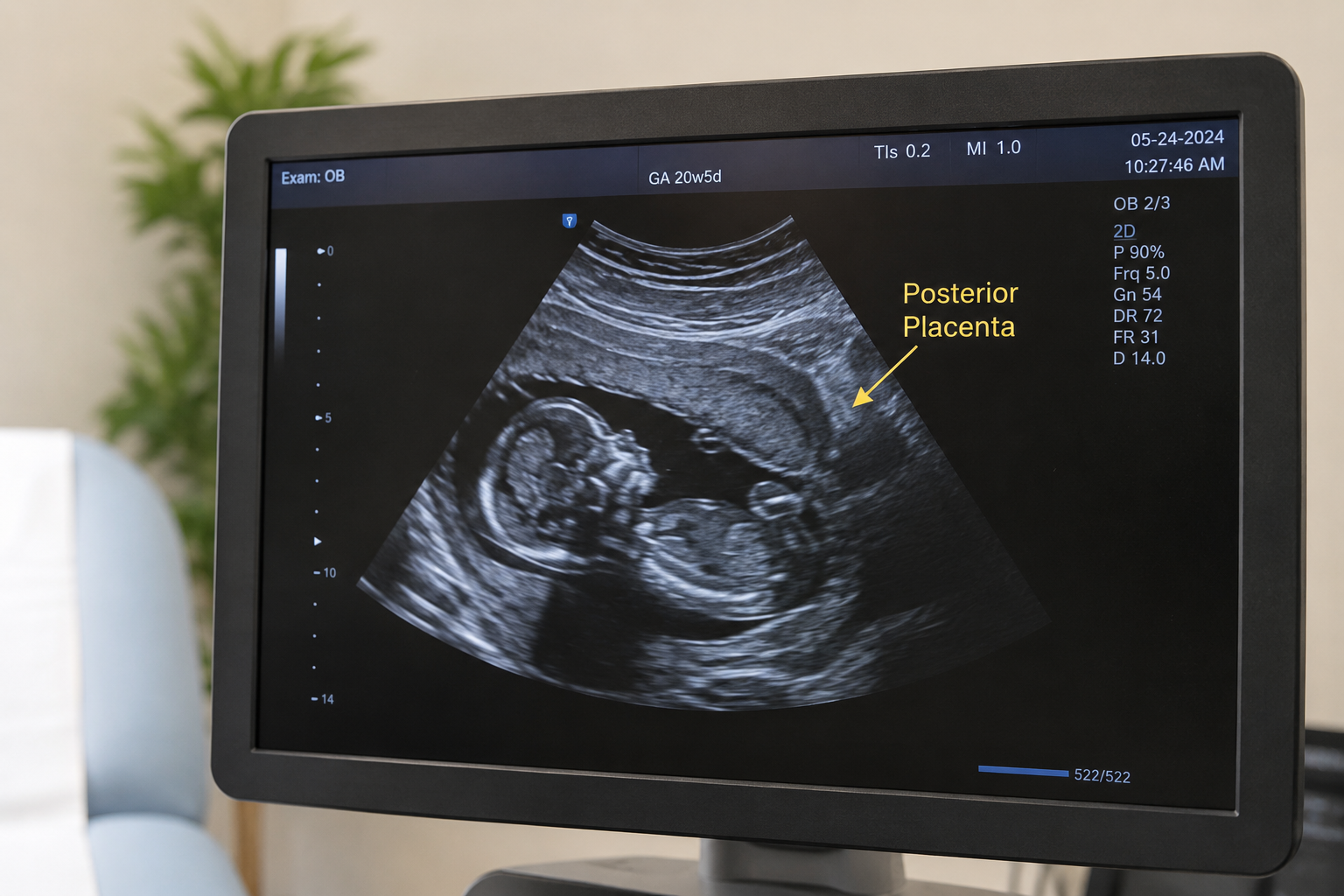
A Back Placenta is one of the foremost common and typical placental positions amid pregnancy. The placenta creates interior the uterus and gives oxygen and supplements to the developing child. When the placenta connects to the back divider of the uterus, it is called a back placenta.
Knowing the position of your placenta can assist you way better get it your pregnancy and your baby’s developments.
What Is a Posterior Placenta?
A posterior placenta is found on the back side of the uterus, closer to the mother’s spine. This position is by and large considered ordinary and does not as a rule cause any complications.
Specialists ordinarily recognize the placental position amid a schedule ultrasound filter within the moment trimester.
How to Identify a Posterior Placenta
The least demanding and most exact way to distinguish a posterior placenta is through an ultrasound examination. The ultrasound report may specify terms such as “back placenta” or “back divider placenta.”
A few ladies with a back placenta may moreover take note their baby’s developments prior since the placenta is situated behind the child instead of at the front of the uterus.
Signs of a Posterior Placenta
Whereas there are no particular side effects, common signs may incorporate:
- Feeling infant kicks more clearly
- Prior location of fetal development
- Less demanding observing amid pre-birth checkups
- Ordinary ultrasound comes about
In any case, as it were an ultrasound can affirm the precise placental position.
Benefits of a Posterior Placenta
A posterior placenta is regularly considered a favorable position since:
- Infant developments may be less demanding to feel
- Ultrasound pictures can be clearer
- It as a rule does not meddled with pregnancy or conveyance
Most ladies with a back placenta encounter sound and ordinary pregnancies.
Does a Posterior Placenta Cause Problems?
In most cases, a back placenta does not cause any issues. It capacities like several other placenta and underpins the baby’s development all through pregnancy.
Standard pre-birth checkups are critical to guarantee both mother and child stay solid.
Conclusion
A Back Placenta could be a typical placental position where the placenta connects to the back divider of the uterus. It is more often than not distinguished through an ultrasound filter and is regularly related with more grounded fetal developments. If your specialist affirms a back placenta, there’s by and large no reason for concern, because it is considered a solid and common pregnancy finding.



Leave a Reply